
Brighton have historically been a bottom half team in the Premier League. However, since Roberto De Zerbi’s arrivral in 2022. In his first season in charge the Italian manager propelled Brighton into Europe, and was hailed by Manchester City’s Pep Guardiola as “one of the most influential managers of the last 20 years”. But what is so unique about De Zerbi’s playing style?
Building out from the back
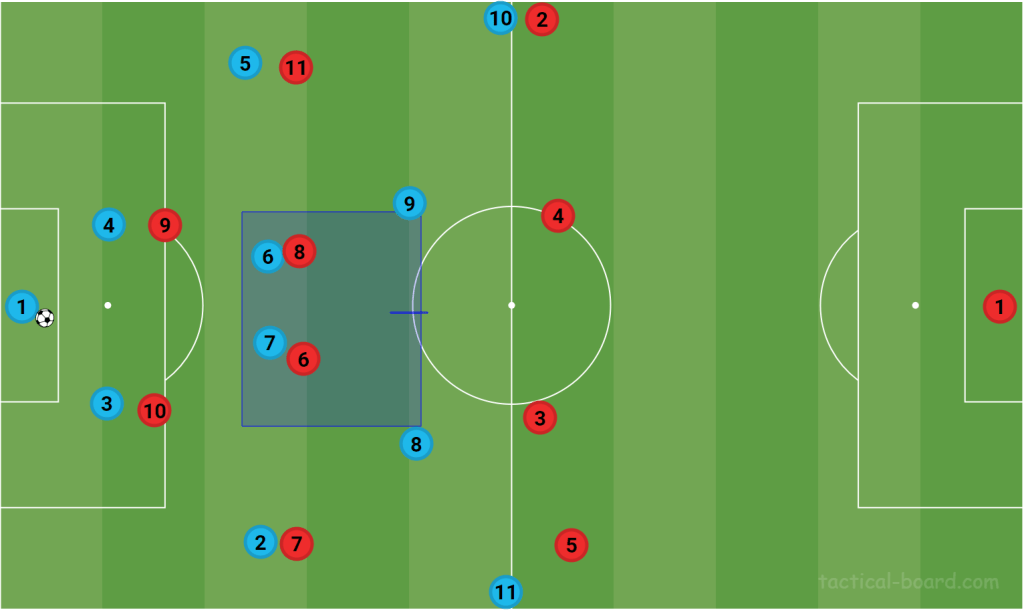
It has become rare to see a modern team using a 4-4-2 structure in possession, with the formation largely being phased out since the 2000s. This is the first uniqueness of De Zerbi’s teams. Brighton’s build up structure is set up in a 1-4-2, with the aim of attracting the oppositions press, opening up space in behind.
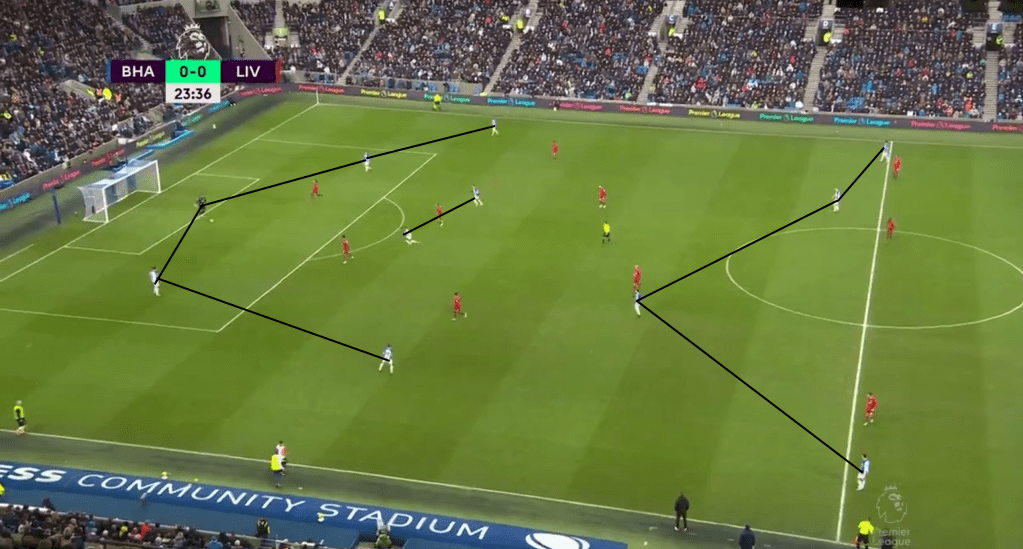
To help achieve this goal and create space in behind, Brighton’s striker partnership usually drops down into the channels. This has two possible outcomes. First option is when the oppositions center-backs follow the strikers deep, which opens up even more space in behind and allows the speedy wingers to attack the oppositions back-line.

The second possible outcome is if the center-backs choose to let the strikers go deep unmarked. This creates a numerical superiority in the midfield which allows Brighton to comfortably build out.
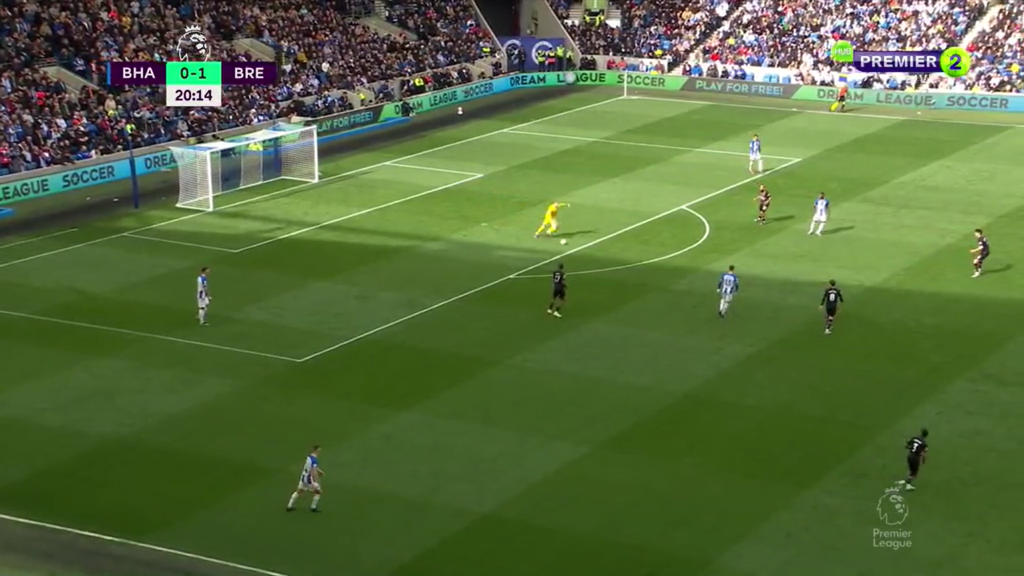
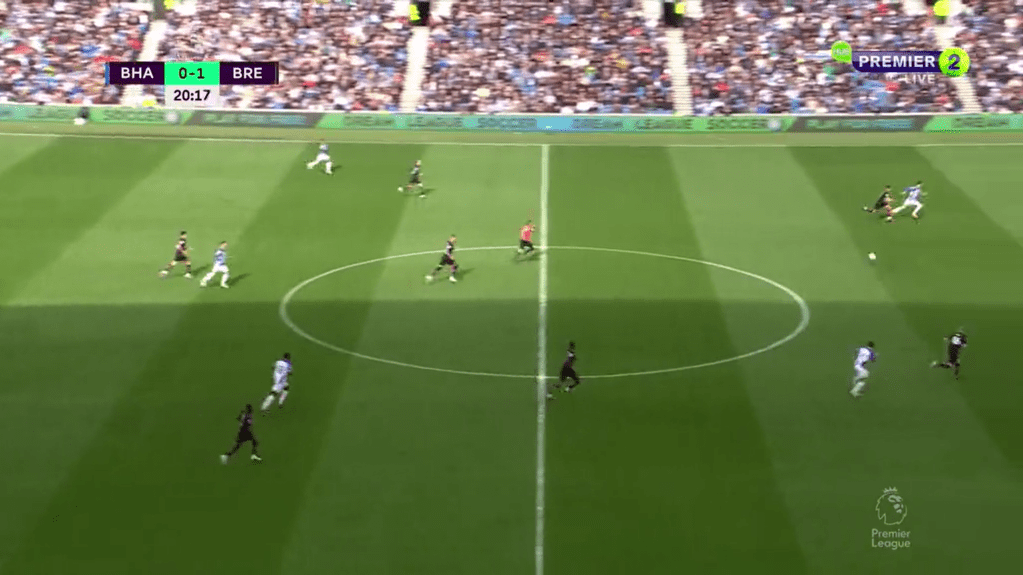
The goal against Brentford at home in the 22/23 Premier League season is a perfect example of the first possibility. Brentford press high when Steele has the ball. The strikers check deep and the center-backs follow. When Brighton’s goalkeeper notices this he plays a long ball into Mitoma who has acres of space.
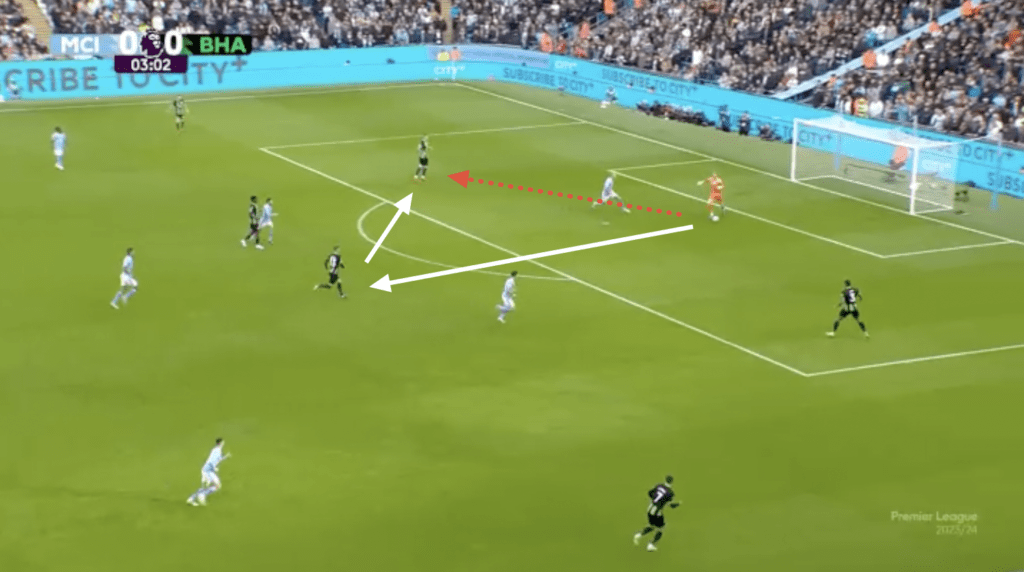
The Third Man combination
One of the main tools of this Brighton team is the use of the third man concept. What this means is that in low build-up when the opposing team is pressing high and closing down passing lanes, Brighton looks to go around the opposition’s player. This movement is essential to bypass the press and attract even more players into your own half.
Higher Build-Up
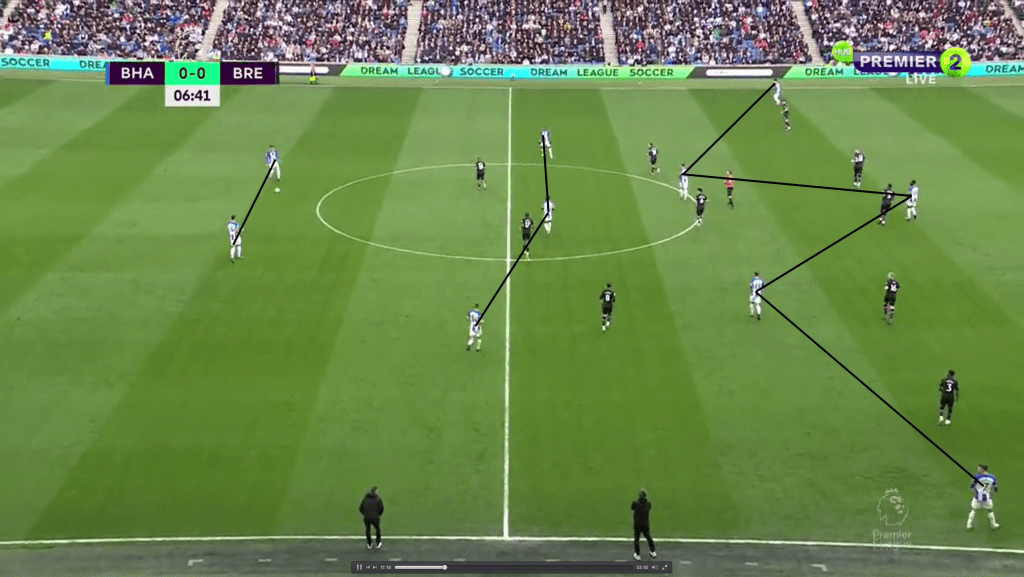
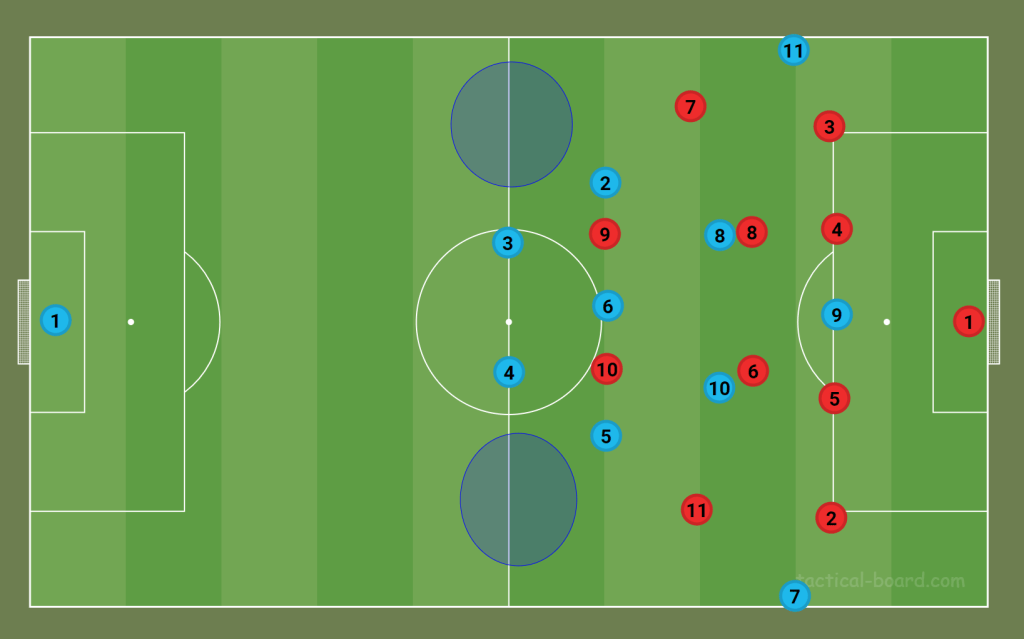
When in a higher build-up and settled offense De Zerbi uses a more positional style of play. With a 2-3-5 shape, De Zerbi uses two 10s in the half spaces, both fullbacks very narrow and very wide wingers. The wingers width stretches out the oppositions back line and allows Brighton to play through the midfield, where they often create overloads.
Defending
Weakness
This midfield overload also allows Brighton to be very effective in defensive transitions, as they have numbers around the ball that are able to counter-press and quickly recover possession. However, this 2-3-5 also exposes Brighton’s main weakness in transition. The problem with this shape is that the team is exposed to counter-attacks if they can’t win the ball high. The narrow full-backs are not able to fully cover the wide areas in transition, leaving Brighton exposed in that area.
Other teams have started exploiting this. On the first goal of their home game against West Ham, when Brigthon lose possession in midfield, James Milner (playing left-back) is caught out of position. Ward-Prowse looks to play a long ball to Antonio who is making a diagonal run into the space vacated by Milner. Antonio beats Webster on the left side and delivers a low cross to Ward-Prowse who just tucks it in to score his first of the season.

High Press
One of De Zerbi’s main principals is a high press, coming from the desire to have control of the ball for as long as possible. Brighton’s press is normally done through man marking. Each defending player is expected to follow their assigned player during the play. In this example against Manchester United away, Brighton mirror United’s 3-2 buildup and tightly mark each player.


 The Soccer Playbook
Deixe um comentário